1. Generation of a controllable electrostatic field
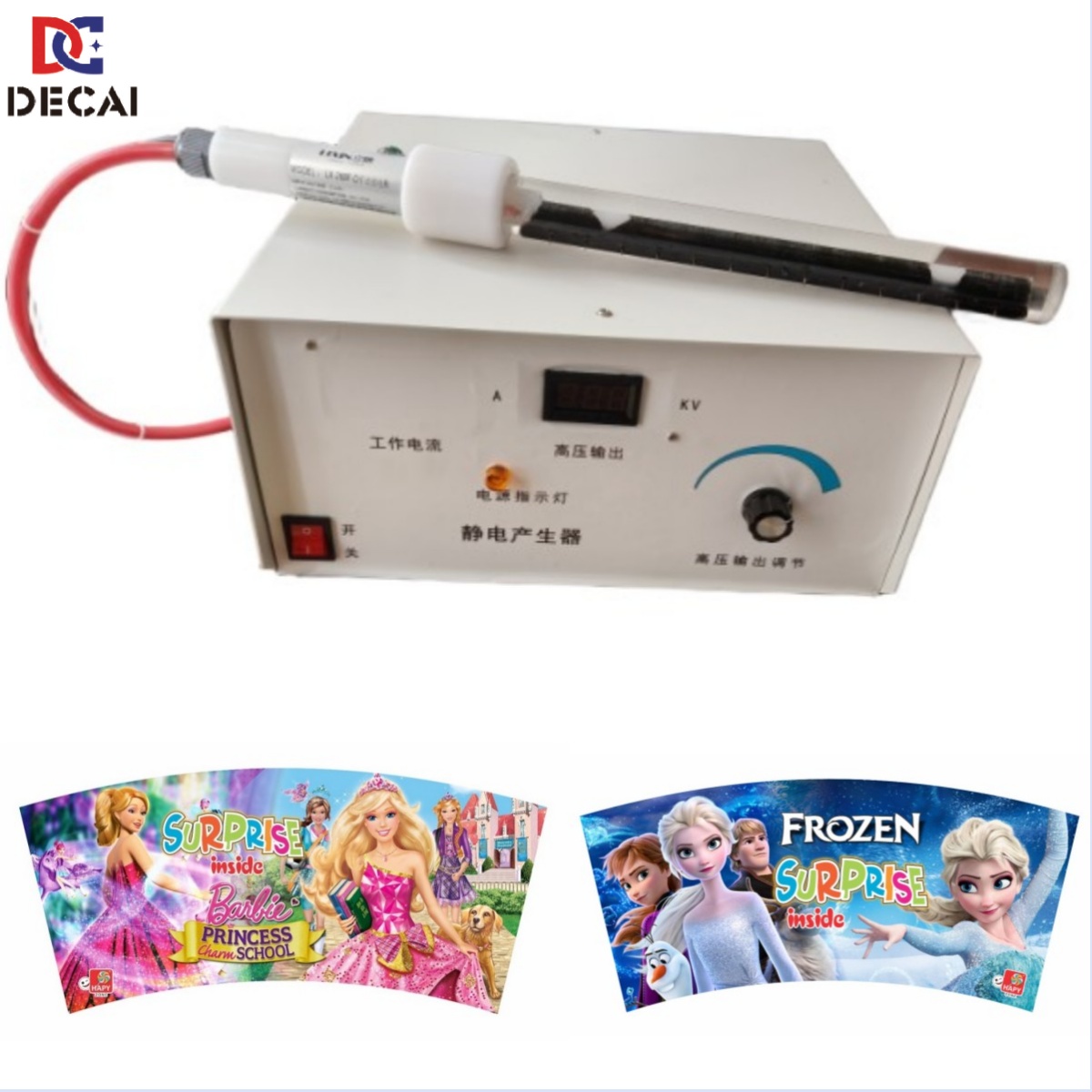
The static charger produces a stable, adjustable high‑voltage electrostatic field. For IML labels, this field creates an instant electrostatic attraction between the label and the mold surface or the pre‑formed plastic part. Advantage: The label stays precisely in position during mold closing and injection, eliminating shifting or wrinkling and improving labeling accuracy.
2. Uniform charge distribution across the label surface
By using a static charging bar or electrode, the charger applies a homogeneous electrostatic charge over the entire area of the IML label. Advantage: This ensures even adhesion force from edge to edge, preventing air entrapment, bubbles, or raised corners. The result is a smooth, professional appearance with stronger in‑mold bonding.
3. Adjustable output voltage for different label materials
A static charger allows fine tuning of the output voltage (typically from a few kV to tens of kV) to match the thickness, weight, and dielectric properties of various IML label stocks (paper, film, or synthetic materials). Advantage: Operators can optimize the electrostatic force for each label type — high enough to hold securely, but low enough to avoid electrostatic breakdown or damage to sensitive printed layers.
4. Static neutralization and rapid discharge function
Many static chargers also include a discharge or neutralization mode to remove residual static after the molding cycle. Advantage: This prevents labels from sticking undesirably to the mold or to each other during demolding and stacking. It also reduces dust attraction on finished IML products, improving cleanliness and production efficiency in high‑speed labeling lines.


Post time: May-09-2026